Wednesday, April 19, 2006

The Mission


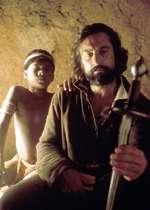
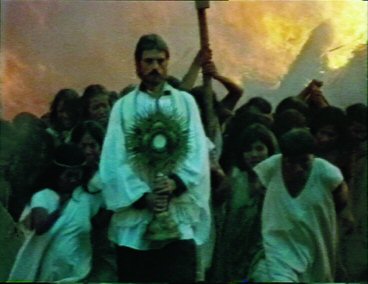
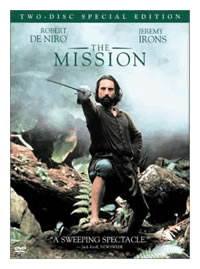
The Mission (1986) is truly a masterpiece. Directed by Roland Joffé, the film takes place in the lush jungles of 18th-century South America, where a Jesuit priest named Father Gabriel (Jeremy Irons) founds a mission and works to convert the indigenous Guaraní. Under the protection of the Spanish empire and the Catholic Church, Father Gabriel attempts to shelter the Indians from Spanish and Portuguese slave hunters like Rodrigo Mendoza (Robert DeNiro).


When the territory is ceded to Portugal, the Jesuits are ordered to disband the mission. Father Gabriel, his fellow priests, and the Guaraní refuse to leave the place they have come to call home. Despite Father Gabriel’s insistence upon passive, nonviolent resistance, some take up arms against the Portuguese soldiers. The entire community is martyred, and the surviving Indian children return to the jungles.

Early in the film, Rodrigo Mendoza kills his own brother in a fit of rage. Paralyzed by guilt, he subjects himself to tortuous penance and, under the compassionate but stern guidance of Father Gabriel, finds a nobler calling as a priest. Faced with the mission's destruction, Rodrigo must decide whether or not break his vow and bear arms again.

Cardinal Altamirano (Ray McAnally), who effectively holds the fate of the Guaraní in his hands, loosely narrates the film. It is he who must advise the Pope whether or not to allow the Jesuit missions to continue. Altamirano cannot help but be impressed by Father Gabriel’s mission, where orderliness and the Indians’ passion for music are encouraged. At the same time, he feels the Portuguese empire’s pressure keenly.


The Mission’s combination of talented acting, skilled cinematography, incredible music, and the central theme of one’s character being put to the test create a poignant film that may very well bring the viewer to tears.


More information about The Mission:
• Won an Oscar in 1987 for Best Cinematography and the Palme d’Or at the Cannes Film Festival.
• Received Oscar nominations for Best Art Direction/Set Direction, Best Costume Design, Best Director, Best Film Editing, Best Music/Original Score, Best Picture
• See http://en.wikipedia.org/wiki/The_Mission_%28film%29 for more info.

Tuesday, April 18, 2006

"When the going gets tough, the tough go shopping!"


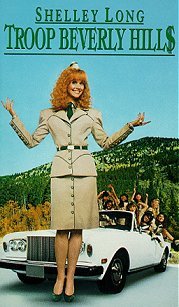
Not only does Troop Beverly Hills combine a group of rich girls full of entitlement problems with the wilderness, it also showcases Tori Spelling at a ripe young pre-teen age.


As Phyllis Nefler, Shelley Long, a rich, recently divorced, thirty-something mother who spends the majority of her time shopping and indulging herself, decides to take on the job of troop leader to her daughter's recently abandoned wilderness troop. Her troop consists basically of mini- versions of Phyllis. They are spoiled, rich, and feel extremely entitled to just about everything that crosses their paths. Phyllis doesn't realize what she is exactly agreeing to by becoming the troop leader, but she soon finds out!

The girls have little to no experience in wilderness and troop activities. They have earned an embarassing amount of zero badges and aren't really interested in trying to figure out a way to earn more. Phyllis feels bad for the girls and their inability to earn patches through the traditional activities, so she schemes up a way for them to get their own patches. She decides they will make their own patches, a "Create Your Own" patch, which include jewelry appraisal, shopping, grooming, and many other non-wilderness themed patches. The patch ordeal is only the beginning for the socialite girl scouts and their pre-madonna troop leader, which they find out through a series of fabricated challenges by the opposing group leader, Velda Plendor, played by Betty Thomas. Velda runs her troop much like a military troop with intense camp outs in the deep wilderness, training similar to something an army would go through, and serious disciplinary rules and orders. Velda detests Phyllis, perhaps because Velda appears androgynous with her ill-fitting clothing, tightly bound hair, which is always up in her hat, and negative attitude, while Phyllis is perky, blond, and beautiful, with tailored clothing and an upbeat attitude. Velda believes the troop should be disbanded. Velda clearly needs to get a life. This is girl scouts, it is not world war two, her obsession with triumphing over the rich troop is bordering on pathetic if not downright depressing.

Through a series of mishaps and failures, the troop and Phyllis finally come out on top, showing Velda and the other people who doubted them that they aren't just materialistic socialites from Beverly Hills, they have depth. I am not sure how true that part is, but Phyllis does make a transformation into a more tender and loving mother and wife figure, reconciling with her husband and realizing there is more to life than shopping.

Pretty Woman


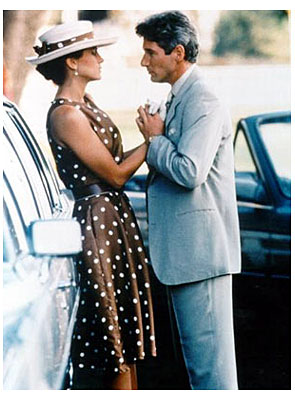
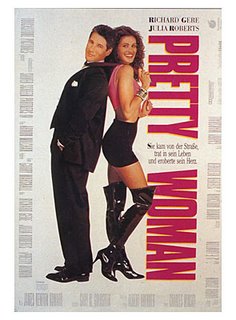
Pretty Woman might just be my favorite 80s movie, if not one of my favorite movies of all time. I don't know if it is Julia Robert's transformation from street-walking-prostitute to polo-game-attending classy lady, or if it is Vivian's "I'll show you" moment in the film when she confronts the shopgirls who wouldn't help her the day before in her prostitute garb, asking them, "Do you work on commission? Big Mistake. Huge. Huge. Mistake," whatever it is, Pretty Woman is a classic 80s film.
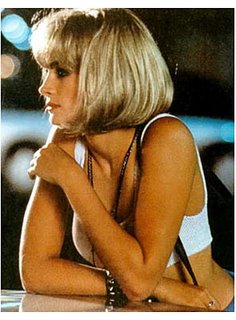


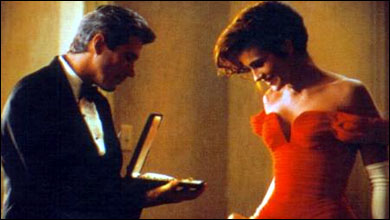
This entertaining, Cinderella story, revolves around the unconventional relationship between a hooker with a heart of gold and a shrewdly successful, but lonely, corporate raider. Vivian, played by Julia Roberts, undergoes a Cinderella-like transformation after she meets Richard Gere's character, Edward, who happens upon this too-attractive-to-really-be-a-streetwalker while lost on Sunset Blvd. Vivian gives Edward directions, but only on her terms, which of course include paying her. It is in this scene that we find there is much more than meets the eye in terms of Vivian. She can drive stick, a talent Edward is not so successful with, she knows a lot about cars since she grew up with brothers, she is playful and full of needless, albeit very interesting, knowledge, including the little tidbit of information that the length of your forearm is the size of your foot. That is something I did not know until I watched Pretty Woman, I am not going to lie. Anyway, she drives Edward to the Beverly Wilshire Hotel, still dressed in her hooker attire, and it is presumed that their relationship will end after the drop off. However, Edward is intrigued by Vivian, not to mention lonely and in need of some company to join him in his penthouse suite on the top floor of the hotel, so he invites Vivian to join him for the night. With this invitation, the movie really starts to get going as the relationship between Edward and Vivian unfolds in a comedically romantic series of events and situations.
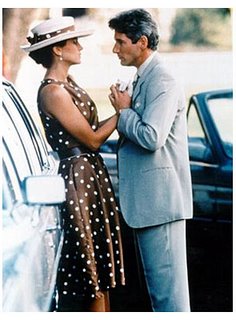


The film really focuses on the different sides of each of their personalities. It cuts back and forth between Edward's business persona where he is shown as a hard-nosed, ruthless corporate raider and the Edward seen with Vivian, which shows his softer, more sensitive side. This back-and-forth shifting sets the audience up for the challenge Vivian will face when she tries to fit into Edward's world. Edward is part of the upper class. He attends polo matches, has cocktail parties, stays in penthouse suites, spends ludicrous amounts of money, and dresses well. Vivian, on the other hand, does not spend her time doing ANY of those things. She has no idea about proper social etiquette and her attire is overtly revealing, if not completely inappropriate. The bulk of the film focuses on her metamorphosis from this foul-mouthed, unlady-like girl of the street to a mannered, well-dressed, woman suitable to be any respectable man's arm candy. Her attempts to fit into Edward's elite world are some of the most comedic moments in the film. She needs lessons on table manners, how to dress, etc. and by the end of the movie she has achieved her goal, however, there are a few moments when she slips up, for instance, when an escaragot slips out of her utensils at a fancy business dinner.
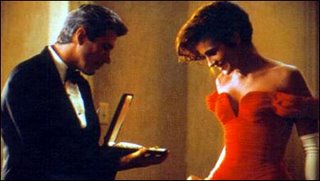


Despite the challenges Vivian faces with her relationship with Edward and her ultimate character transformation, she is able to come out on top. Things go a little off the comedic side at times, for instance, when Stuckey slaps her around after she rejects his advances because Edward has told him that she is a hooker and when people are mean to her at first because of the way she is dressed and what not, but things don't stay too bad for that long. He, of course, falls for Vivian because she turns out to be this vivacious, smart, funny woman that you would be stupid to pass up even though she has a shady past of being a prostitute. She finds herself falling for him as well because he takes care of her and sees her for more than just a hooker, even though he does pay for her services. Everyone forgives and forgets and Edward and Vivian ultimately end up changing each other. She has made the obvious transformation, but Edward undergoes one as well. He is no longer the work-obsessed, emotional flat line that he was at the beginning of the film, now he is ready to take on love in every way.

Of course, a major element that makes this film so fantastic is the phenomenal soundtrack. "It must have been Love" and "King of Wishful Thinking" are two songs from that movie that I probably played on repeat for, oh I don't know, ten years. The soundtrack and great 80s clothes only add to the excellence of this film.
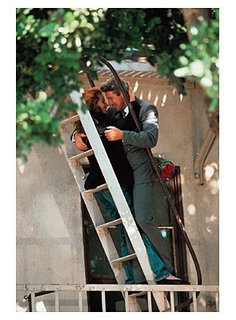

Feeling screwed up at a screwed up time in a screwed up place does not necessarily make you screwed up.


Pump up the Volume
What seems on first glance to be just another movie on teen angst and rebellion turned out to be quite an insightful story of a teen trying to find his own identity. Christian Slater, somewhat reprising his role from “Heathers,” stars in this movie as a hard-hitting pirate radio station DJ, Mark - the propagator of all sorts of “teen problems.” He uses bad language, insults the school system, and basically prank calls school administrators to make fools of them on the air.
Once the movie gets going, however, you begin to realize that Mark is just trying to figure himself out, and deal the world he lives in. He can’t seem to find a point to anything, and calls himself part of the “why bother” generation. You can see his struggle to make sense of things through his broadcasts – though they start out crude (we first see him pretending to masturbate into the microphone), later discussions breach the subjects of teen suicide and the hypocrisies of the public school system (his dad is an administrator, so he is able to steal private files and see the corruption going on in the school – the principal, in order to improve the school’s test scores, got rid of under-performing “troublemaking losers”). The conversations don’t come across as staged, however. They are awkward, and heartbreaking at times as Mark tries to reconcile himself with the screwed up way the world works, and he doesn’t always give good advice. The main theme of the movie isn’t about preaching a certain way to live, or only encouraging people to better their lives, but instead encouraging people to “talk hard,” and not ignore the wrongs they see in their society just because it’s easier to go along and be accepted.

Favorite quote:
Mark Hunter: You hear about some kid who did something stupid, something desperate; what possessed him? How could he do such a terrible thing? Well, it's really quite simple, actually. Consider the life of a teenager - you have parents, teachers telling you what to do, you have movies, magazines and TV telling you what to do, but you know what you have to do. Your job, your purpose is to get accepted, get a cute girlfriend, think up something great to do with the rest of your life. What if you're confused and can't imagine a career? What if you're funny looking and can't get a girlfriend? You see, no-one wants to hear it. But the terrible secret is that being young is sometimes less fun than being dead.

http://www.imdb.com/title/tt0100436/
http://infinitecoolness.com/galleries/volume/

Sunday, April 16, 2006

"SUSAN! i thought you were dead!"... "No, just in New Jersey"


Ridiculously sick of all the high school teen drama movies that I have been subjecting myself to lately, I called my friend Joanna (the un-official, official movie critic and film aficionado of my friends) who suggested that I watch Desperately Seeking Susan, as she has been saying since we were, oh say, about 13. Why not? I thought to myself. And I’m glad I did.

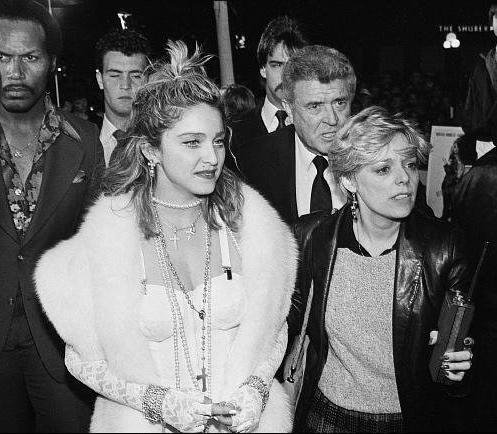
The plots confusing enough to entice you to watch, yet easy enough to follow, with cases of mistaken identity on more than a couple different levels. Roberta is a New Jersey housewife played by Rosanna Arquette. She becomes obsessed with a woman named Susan who communicates with her boyfriend through the personal section of a New York City tabloid. Desperate for a little excitement in her life, Roberta follows Susan to a meeting in the park with her boyfriend, and then buys her jacket after Susan sells it at thrift store. In the jacket Susan (played by Madonna) has left the key to a locker of hers, and thus starts looking for Roberta. Meanwhile, Roberta is mistaken for Susan in the park because of the jacket and is confronted by a mob guy. The confrontation makes Roberta fall and get amnesia, and then she starts to live Susan’s life, all the while Susan has met Roberta’s husband and lives hers.

Seem complicated? It’s not too bad and all straightens itself out in the end, with everything in the right place, and everyone living their own life once again.

"i prefer cruelty... it has a nobler ring to it."


Dangerous Liaisons is an adaptation to a play that’s an adaptation to a book that was so scandalous that when it was first published and Queen Marie-Antoinette commissioned a copy for her personal library she had to have it bound in a blank cover so that no one would recognize the author's name or title. In Frears’ movie version of the book, you can definitely see why. The plot twists and turns as the two main characters, Merteuil and Valmont use both the other characters and each other to get revenge using sex and love. Throughout the movie, and we assume throughout her life, Merteuil messes with peoples lives and manipulates the other characters all while maintaining a spotless reputation. However, it all comes crashing down after Valmont reveals the truth of her cruel personality to the entire city by giving Danceny letters he had from Merteuil detailing her exploits before he dies after dueling with Danceny.

The film has an all star cast of Glenn Close, John Malkovich, Michelle Pfeiffer, Uma Thurman, and Keanu Reeves, the last one being thrown in under the term “all star” simply because of the success of the Matrix Trilogy. (Let’s be honest. His acting is terrible, and this is no exception, especially for a period piece.) It was nominated for seven academy awards and won Best Adapted Screenplay, Best Costume Design, and Best Art Direction, although many people were shocked that John Malkovich didn’t receive as much as a nod in his direction for his awesome portrayal of Valmont.

All in all, I liked the film, which is saying something coming from a girl who usually finds historical period pieces ridiculously boring. But then again, it may have something to do with the fact I’ll always have a weakness for anything related to Cruel Intentions in my cinematic heart.

Bloody Simple? no...terribly confusing


I sat down to watch one of the other Coen brothers movie's "Blood Simple", thinking it would be somehow similar to Miller's Crossing, which i enjoyed. It wasn't. I was pretty confused as to what was going on for the majority of the movie. It was bloody, gross and just weird. But, i guess the acting, and filmography were good, but i just didn't like the subject matter.
The movie starts with Abby and Ray sleeping together, despite the fact that Abby is married to Marty. A private detective hired by Marty gets pictures of the two in a cheap motel and gives them to Marty. This much makes sense, but from here on out the movie spirals out of control (sort of).
Marty and Ray have a mini-confrontation, and Ray quits/ is fired from his job (MArty is his boss). Abby moves into Ray's house, but not before finding and loading her pistol.
Then, Marty hires the detective, Loren Visser, to kill Ray and Abby. And the movie takes a serious twist. The viewer thinks that Loren kills the adulterous couple, but in fact he doctors photos of them to make it look like they have been shot. Marty pays Visser for completing the job, but then Visser shoots Marty, and leaves him to die. Throughout this scene, there are 4 dead fish sitting on the table which is a little unnecessary but makes the scene that much more unsavory.
Then, Ray shows up and attempts to clean up the mess created by the fact that Marty is not quite dead yet, and slowing dripping blood on to the floor (Ray thinks he's dead though). Thus begins the blood fest. Ray is a little on the stupid side, and begins to clean the blood up with his jacket. This scene is borderline ridiculous, as Ray hustles back and forth to the bathroom, trying to clean up the mess. Then he hoists the bloody Marty into his car and drives him out to the countryside. Something freaks Ray, and he jumps out of his car, looking terrified. When he gets back to the vehicle, Marty is gone. He walks to the other side of the car, and sees the dying man crawling on all fours, trying to escape. Then begins another highly uncomfortable scene. At first it appears that Ray is going to run Marty over, then he gets out a shovel, and it looks as if he will club him to death. But, in the end, Ray just buries him alive. (Ewwwwwwwww).
As Ray is trying to bury Marty, the dying man finds his wifes pistol (the one used to shoot Marty) in his pocket. It only has one bullet left. Marty tries to shoot Ray, but the chamber is empty.
After this Ray returns to Abby, and tries to talk to her about what just happened. He is slightly unstable by this point, and Abby is weirded out.
At the end of the movie, everything gets turned on its head. Visser now comes after Ray and Abby, leaving the viewer to wonder who really hired him and what his real motivation is at this point. He shoots Ray from an adjacent rooftop, and tries to shoot Abby, but she manages to temporarily escape. Then, there is a chase within the house, as Visser tries to find and kill Abby. She manages to shut his hand in a window, and stick a knife through it (lots more blood, yay). He break through a wall in order to free his hand, but by this point he has used all of his ammo. Abby has one bullet left in the gun that shot her husband. She manages to kill Visser, and the movie ends... .happily ever after? not so much....

Saturday, April 15, 2006

Don't monkey with tradition!


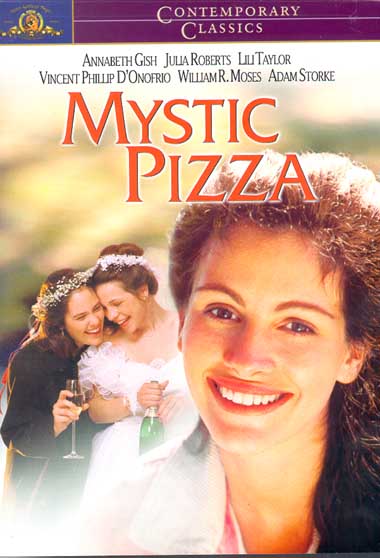
One of Julia Roberts's first films, Mystic Pizza is fun romantic comedy from 1988. Julia plays Daisy Arujo, a rebellious heartthrob who heats up the small town of Mystic, CT. She and her sister, Cat, work at the local pizza place, along with their good friend Jojo. Each of the girls has a significant other, though all three situations are a bit twisted.

Daisy falls for preppy out-of-towner, Charles, who was kicked out of Yale Law for cheating. They go on joy rides in his Porsche and share a romantic night at Charles's empty vacation house, but their different socioeconomic backgrounds cause tension. Cat takes a job as a babysitter, and ends up in a forbidden love with the father of the girl she watches. Jojo, whom we see faint at the altar in the first scene, has an on-and-off relationship with Bill, played by Vincent D'Onofrio.
Amidst all this romance, the girls are struggling with their uncertain futures. Cat has been accepted to Yale, but worries about how she will pay for it. Daisy fights with her mother about being less successful than Cat, and having a negative reputation. Leona, the owner of the pizza place and holder of the secret recipe for "Mystic Pizza," acts as a mother figure for all of them, encouraging them through the emotional times. When her business booms due to a superb review, she even gives Cat enough money to pay for Yale.

This film is a realistic take on the late teenage years. The acting is excellent, and the conclusion predictably happy. It is not a distinctly 80's teen movie, but it is just as enjoyable as the stereotypical high school flicks. Plus, you can't go wrong with Julia Roberts, even in her early acting years.

Thursday, April 13, 2006

"Of course you're confused. You're wearing my underwear. "


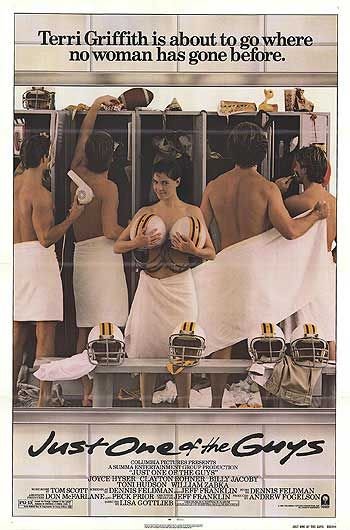
"Just One of the Guys" is very much an 80s teen movie, about surviving high school, relationships, and growing up. Only this time, there is a bit of a “Tootsie” type of twist. Well not just a bit, the movie is all about gender bending.


Joyce Hyser stars as our leading lady Terry who transforms herself into a boy modeled after her brother. Terry is a popular teenager at Sturgess Wilder High School. She is beautiful, smart, and it doesn’t hurt that she is already dating a college boy (actually, and more importantly, an attractive college boy named Kevin.) After writing a journalistic piece for a contest at her school that would guarantee her a spot working for the paper over the summer (which would help her become the reporter she desperately wants to be,) she’s devastated that her teacher won’t submit her story. Angrily, she thinks that’s it’s because she’s a girl, and thus enrolls in a different school in town, as a man, and submits her article there.

Along the way she deals with all the stuff that you would imagine one would deal with. She must defend herself from both the high school bully and a potential girlfriend, all while using the boys bathroom and attempting to hide the fact that she’s actually a girl (which her brother helps her with, comically teaching her how to properly scratch herself in public.) She befriends another outsider at her new school named Rick, and the plot twists when she realizes she actually likes him as more than a friend. As would be predicted by anyone familiar with teen cinema, the film climaxes at, of course, the high school prom where Terry reveals her feelings for Rick (and proves that she’s actually a woman by flashing him.)

Wednesday, April 12, 2006

High school drama... no way!


So there I was, searching for an 80’s movie to watch, preferably a mindless comedy because it had been one of those days, when I came across “Private School” (Aka Private School… for Girls). I was immediately intrigued. There have been so many 80’s movies about high schoolers, but private school? Going into it, I hoped it would be somewhat cynical as my approach to my private high school had been. What I got was a cross between a typical 80’s teen comedy (laden with sexual inuendos and, well, just a lot of sex) mixed with a typical 80’s coming of age story stereotypically portrayed by the opening song “Don’t Go Breaking My Heart.”

The movie is set at Cherryvale Academy, which is a private all girls high school for only the wealthiest of families, run by the headmistress Miss Dutchbok. The story centers around three girls: Christine who is in love with her boyfriend Jim from the nearby private boys school, the cynical Betsy who is dating Jim’s disgusting (think Ram from Heathers) friend Bubba, and Jordan who’s Christine’s arch enemy and will do anything to steal her boyfriend (including riding a horse topless.) The girls go through a series of pranks such as leaving dog crap at each others doors as the guys attempt to dress in drag to get into the girls showers.

The movie was a pretty typical 80’s teen flick, with enough sex to make the guys want to watch it, yet enough “growing up” to make it a hit with the girls too.

Teaser? Click to watch the Trailer! [just wait out the commercial]