Thursday, August 24, 2006

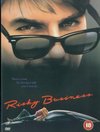
Risky Business: An Early Warning of Tom Cruise's Madness

Directed by:
Paul Brickman

Starring:
Tom Cruise
Rebecca De Mornay
Joe Pantoliano

Tom Cruise stars in this eighties comedy classic as Joel Goodsen, a straight arrow hell-bent on getting into a good school (Princeton) so he can major in business and make beaucoup bucks, a stereotypically eighties mindset; like Gordon Gekko says, “Greed is good.” However, early on, we, the audience, are clued into to the fact that Joel is unhappy with the track his life is on. While he is sitting in a diner eating with his friends, he asks, “Don’t any of us want to do something other than just make money?” to which his friends all reply, “Make money.”

Joel’s life veers off its carefully constructed path soon as his parents leave town. Heeding the sage advice of his friend Miles to just say “fuck it” and go buck wild, he does just that. Once his parents are gone, we see Tom Cruise in the scene even people who haven’t watched the movie recognize: him sliding across the hallway in his socks and underwear, lip-synching “I Like That Old Time Rock ‘n’ Roll.” Although this scene does the necessary task of cueing the audience Joel intends to cut loose, I could do without seeing Tom Cruise seizing spastically in his tighty-whiteys. (This scene, also, is perhaps an early warning sign Oprah should’ve noted: Tom Cruise hates couches…and he’s insane.)

Things get complicated for Joel when Lana (Rebecca De Mornay), an escort he hired, shows him a good time. “That’ll be $300,” she says the following morning. But he can’t pay. He only has fifty, having blown the other $75 his parents left him on paying off a black transvestite hooker, Miles hired for him. Unable to pay, Joel rushes off to the bank, but when he returns Lana is gone, as is Joel’s mother’s crystal egg. Even though the egg is tacky as can be, apparently it means a lot, is worth a lot.

Joel and Miles go to confront Lana about the missing egg, but instead wind up rescuing her from her pimp, Guido, played marvelously by Joe Pantoliano. They then take Daddy’s Porsche on a high-speed chase through town, Guido nipping at their bumper. [What's with the racial slur against Italians, anyways, Brickman? You didn't call Joel, "Joel Honkey." You called him Joel Goodsen--hmm...Goodsen--"Good son," a bit ham-handed, don't you think?]

Things spiral out of control from here. But in the process, Joel and Lana form a romantic bond. (How predictable; how cliché. The hooker with the heart of gold. And the hooker with the—never mind, that train of thought is a bit too vulgar for a class assignment; it was such a good rhyme, too; oh, well. We encounter this theme in another eighties classic, Pretty Woman, which is later revisited in the nineties in Leaving Las Vegas and in the 00s in The Cooler).

Culminating Joel’s descent into hell, he rolls Pop’s Porsche, which he wasn’t supposed to be driving to begin with, into a lake. Oopsy-doodles. This motif, the wrecking of the patriarch’s expensive wheels, occurs in Ferris Bueller’s Day Off as well. However, unlike, Risky Business, in which the sinking of the Porsche mirrors Joel’s sinking future, having been suspended from school and having plunged his GPA to unsalvageable depths, in Ferris the Ferrari breaking through the glass symbolizes Cam’s breaking away from his father’s control.

To pay for the repairs, Lana convinces Joel to open a one-night brothel. He does. The money flows in. During this orgiastic section of the film, a recruiter from Princeton visits Joel. They had a meeting, he says. So, in the midst of the chaos, they attempt to conduct the meeting, though hookers and horny teenage boys continually interrupt them. Eventually, Joel, proving just how changed he has become, says, “Fuck it,” and sends Mr. Princeton on his way. (Later we find out Princeton has inexplicably accepted Joel; thanks for showing the recruiter such a good time, ladies).

About fifteen more minutes of screen time happens after this, including the madcap struggle to put the house back in order before the folks get back, but telling Mr. Princeton off is the climax of the movie. This is where Joel accepts his fate. “Looks like University of Illinois,” he says. This is where Joel learns that you don’t have to take a rigid path to be successful. You can make money and be happy, a sentiment echoed in the final line of the film, when Joel voices-over, “In one night I made $8,000.” This closing message, while still tethered to the eighties mindset of financial success, does stray slightly by telling the audience you don’t need a suit & tie, or a Princeton MBA to be "successful."

The final verdict: I'd give this movie a 6 on a scale of 1-10. It kept me awake and engaged even after I had gotten off a long shift at work, which is no easy feat. If you haven't seen it, it's worth a one time watch, but not many more.

Peace out, yo.

View trailer here: http://www.imdb.com/title/tt0086200/trailers

Wednesday, August 23, 2006

OK, a bit of a delay

So, there has been a bit of a delay in getting The Sure Thing, but once I write it up I will also have something on Something Wild too.

Tuesday, August 01, 2006

Oh, she's the sure thing...

Coming soon a post on the 1980s remake of It Happened One Night.

Monday, July 03, 2006

Blush and Bashful

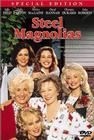
Steel Magnolias
(1989)
Starring
Sally Field, Dolly Parton, Shirley masculine, Daryl Hannah, Olympia Dukakis, and Julia Roberts
Also Starring
Dylan McDermmott, Tom Skerritt, and Sam Shepard

Every woman should see this movie, no matter what age. The best cast, the best story, the best characters. It is Julia Roberts coming out party, but hardly a Julia vehicle, it never gets old and you will never forget it.

The movie is written by and based on the screenplay by Robert Harling, who wrote the play after his sister died during childbirth from complications due to diabetes. It was filmed in the writers hometown using houses that were donated by the townspeople for the filming. The directors commentary features excellent notes on the filming, like all the clothes were purchased in thrift stores in the town, and all of the extras in the movie are local townspeople. Additionally, the nurses that care for Shelby are the same nurses that took care of the writer's sister before her death.

Steel Magnolias is the story of a diabetic woman, Shelby, who is at a turning point in her life, is ready to begin a life of her own and start a family. While the movie focuses brilliantly on the changing dynamics between Shelby and her mother (Sally Field), Steel Magnolias is a film with its heart solidly planted in the the South and the women who live there. It is a movie about all generations struggling to maintain the gentile nature of a Southern Belle while adjusting and growing into the modern, independent woman.

Shirley MacClaine and Olympia Dukakis almost steal the movie. The stellar supporting cast creates not only some of the most memorable humor, but there is also a depth in characters and their relationships that creates a sense of warmth and compassion. It sucks you in and takes you safely through this journey of southern life, at it's highest and lowest. The title really says it all: even the most beautiful and delicate of flowers can, with the support of loyal friends, be made of steel.

View the trailer

Aliens (1986)


Aliens (1986)
Directed by James Cameron
Starring Sigourney Weaver

I watched the Ridley Scott-directed Alien (1979) recently for the first time recently. I liked the stark, quiet quality to that film. The minimalist approach to depicting the future worked well, I thought. Cameron uses more 'futuristic equipment' in this film, a lot of which look 'early 80s.' (The less there is, the least number of chances to mess up!) I appreciated Scott's stylized approach to the cinematography.

In the first film, warrant officer Ellen Ripley seems vulnerable at times when she challenges authority and doesn't quite get through, but keeps her head and holds her ground. Toward the end she kills her special male friend (boyfriend) along with others who have been captured, cocooned, and possibly impregnated; so she does what she has to, with little emotional confusion. The turns out to be the strongest, the one that was right all along, and the one who survives...with her cat, Jonesy.

The diversity of the crew in that film, a mixture of men and women that includes a black man, indicates that in the future, humans have found a way to exist without prejudice.

Ripley finally gets rid of the alien by having it sucked out of her shuttle. She doesn't use her weapon very much. Perhaps a one on one battle with the alien, in which she actually wins, didn't seem plausible to the filmmakers at the time.

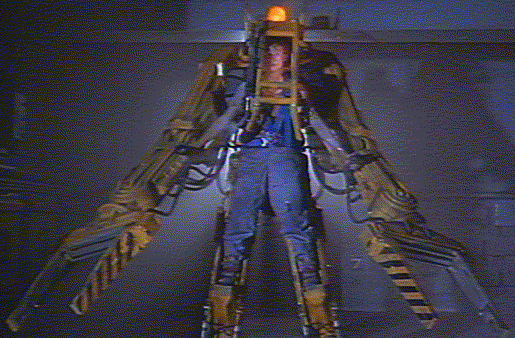
When I began watching James Cameron's Aliens, I thought Ridley Scott's was way superior. (I did not have the luxury of seeing Aliens in widescreen format, which is a crime, I know. I would like to see it again to get the full scope of all the cinematographic techniques.) Besides the set design, the acting was better in the first film. Even Ripley's assertiveness in this film seems more deliberate and contrived than in the first film. Sigourney Weaver's voice seems deeper than before. I liked how in the first film, she was a normal woman who happened to be right and in control. She didn't have to seem 'masculine' and she didn't have to be 'sexy' to be tough. In one scene in Aliens she gets into the loader and proves that she can operate it just as well or better than any man. The military officers laugh a "Whoa! Check it out, she really can do it!" laugh. I don't know that that reaction would have happened in the first film...but maybe.

Ripley in the loader. Awesome.


I hated the characters in this film at first, especially Bill Paxton's. Man, is he irritating. They seem like testosterone-charged caricatures, compared to the ones in Alien. I didn't like the hyped-up emotional quotient to this film, as compared to the first. Gone is the social ease apparent in the first film; in its place are emotionally charged swearing and cheesy one-liners. Also, with these characters, it seems as though the prejudices of the early 21st century are still around, as the ethnicity of a Mexican character is referenced a couple of times in the first few minutes the audience meets her. It seems as though Cameron is trying to make the characters relatable to the audience. Anyway, as the film progresses, we realize that they aren't bad; they're just rambunctious soldiers. They redeem themselves because they fight bravely. Most importantly, they back Ripley up when she takes control.

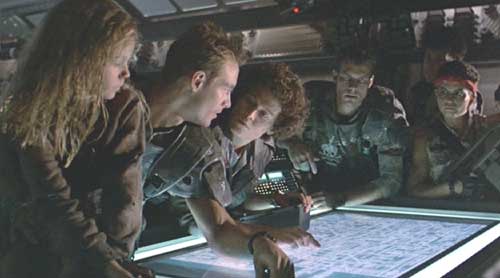
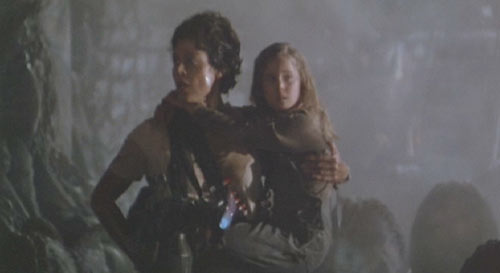
Yes, Ripley takes over from commanding officer Lieutenant Gorman, who antagonizes her for half the film. He dismisses her repeatedly and in one critical scene when the on-ground crew members face danger, he doesn't take action based on her warnings until Burke (Paul Reiser) explains what she's saying to him. She finally wrests control away from him and despite Burke's efforts later to sabotage her in order to retrieve alien specimens, she saves the day again with the help of a little girl named Newt.


Veteran survivor Newt looks on as the military officers try to figure it all out.

As the film went on--probably about an hour into it--I began to appreciate the heavier concentration of action than in the first. I liked how Ripley actually takes on the queen alien, almost hand-to-hand (even though she needed a robot-suit-contraption to do it). Again, though, she doesn't kill it; she has it sucked out into space. But she destroys the nest and saves the remaining commanding officer, Corporal Hicks, and the android Bishop. (And Newt...who does get captured at one point. Heeeey, did the aliens impregnate her???)

Ripley and Newt speak for the first time.


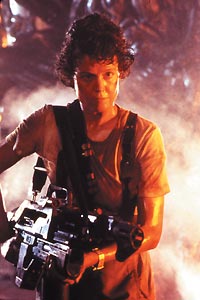
Newt in this film replaces Jonesy to show Ripley's soft side. She humanizes her. It's important that Ripley's toughness is balanced by her caring nature. I don't think it's a weakness that she is compelled to go back and risk everyone else's life to save Newt--her maternal instinct is a strength. I thought it was interesting that wanting to save Newt's life motivates her to load up with two gigantic guns (really, for the first time; she doesn't use her flamethrower too much in the first film and a man teaches her to use the other gun in this film...but she is eager and surprises him with her skills). Armed with a flamethrower AND a grenade launcher/rifle-thingy she takes on the nest site. If it were a male character saving a little girl, he'd still seem tough, not weak, for going back.


I liked one scene where a chain of the crew is making their way through a series of tunnels. Ripley is in front, directed by Newt. Vasquez, a woman, brings up the rear, holding off the aliens with her weapons. The guys are in the middle, protected and led by the women. I also liked another scene where Ripley roughs up the slimey Burke a little bit. He so deserves it.

I wonder if the alien is Ripley's alter ego, like Van Helsing/Dracula. Ellen kind of sounds like alien... Maybe that's a stretch.


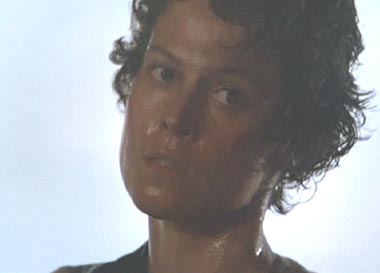
Mirror image?


I think Ellen Ripley is a one-of-a-kind character in the world of female action heroes. She's held up well over the last almost 30 years, in terms of her strength as a female. Yes, she is in her underwear in a few scenes, and if you do a Google image search for 'Aliens' and 'Sigourney Weaver' you'll see lots of stills with Ripley in her underwear, but at least it's not revealing Victoria's Secret lingerie! And she's not in her underwear all that much in the first two films, anyway (though more in the second than the first). Overall, I think she kicks butt. Sigourney Weaver's Ripley doesn't rely on her sexuality to seem fierce in the same way as Angelina Jolie's Lara Croft or Anne Parillaud's Nikita. She seems more like a real woman, which is tough enough!

Sunday, July 02, 2006

Fantasia can arise anew


Forget Legend and Labyrinth with their scientologist forest children and ginormous codpieces, if you were a fantasy movie in the 1980s, you wanted to be Neverending Story.

After being picked on by bullies, Bastian retreats to the really creepy attic that is somehow located at his school. Once he begins reading the leatherbound book, the story shifts to the magical world of Fantasia that is on the verge of being completely destroyed by the Nothing. The only hope for Fantasia rests with the young hero, Atreyu, who can restore Fantasia by giving the Childlike Empress a new name. Aided by his trusty steed Artax and Falkor, a white dragon that used to scare the bejeezus out of me when I was young, Atreyu sets out on his quest to save Fantasia from the Nothing.

Neverending Story is really a unique children's movie in that it deals with the concept of death. While trudging through the Swamp of Sadness, Artax becomes trapped in quicksand and drowns. Watching it, even now, is incredibly depressing. The scene really adds to the film and I think contributes to the reason it hasn't fallen away along with countless other children's movies that are all sunshine and farts.

For the time, the special effects were quite good, although by today's standards are quite dated.
The one thing that always bugged me about the film was that damn dragon, Falkor. The wolf beast never bothered me, but that dragon was scary. I mean, look at him. Ugh, creepy.

Blood Simple (1983)


Blood Simple (1983)
Directed by Joel Coen
Written by Joel and Ethan Coen

Starring Frances McDormand, Dan Hedaya, John Getz, M. Emmet Walsh

Call me quirky, but I really like the Coen Brothers, and I haven't even seen all their films. Raising Arizona is one of my favorite movies; I first saw it when I was young and impressionable and it still holds up. I really enjoyed O Brother, Where Art Thou. Fargo made me feel uncomfortable, but I get it.

Blood Simple is suspenseful enough so I wasn't sure if it was okay to laugh. But some of it made me want to, though he subtle humor in this film, billed as a drama/suspense, is nowhere near as obvious as that of Raising Arizona.

SPOILER ALERT

It opens with the narration of one character who ends up dead, like in American Beauty...but we're not supposed to know that. Then... a recurring beat throughout the film that mimics a heart beat. We first hear it in the music in the opening credits over 'Blood Simple,' which synchronizes with the beat of windshield wipers. Later we hear it with footsteps and an an alarm clock.

I felt badly for all the characters, except for the scummy detective, played by M. Emmet Walsh (who also plays H.I.'s loud, obnoxious coworker in Raising Arizona). Even Abby (Frances McDormand), whom we think is shady and dishonest, earns our sympathy by the end.

The extended death scene was so pathetic at times it was almost funny. Ok some of it was funny. Not laugh-out-loud, guffaw funny...but funny enough that it makes you feel bad for thinking so.

I love the way the Coens craft their shots. There is a lot of zooming in from wide shots consisting of parallel lines that converge on a horizon, which speaks to the open Texas surroundings and also helps convey the underlying loneliness and alienation of some of the characters. The use of the handheld --- the excitement in some of the more suspenseful scenes.

I forgive the synthesized music because it works in this independent film. I think it adds to the film's charm, even though the film is a bloody drama. It works in comedies and bloody films for some reason.

Overall, I think the film holds up well. Something that is uncommon for an 80s movie: out of all the characters all the white males end up dead...and everyone else lives! Wow!


I noticed a couple of tiny things. When the detective is leaving Ray's house, someone is visible in the light to the right of the screen as soon as he gets outside. Is that a goof? Also, I could have sworn I saw Tom Cruise leaning against a car in a scene featuring a bunch of burnout kids (right before Marty meets the detective in his VW beetle).

I loved this film. I want to see it again because I know I missed some things the first time. I thought the ending was innovative and great...and pure Coen brothers. (Although I can see a Psycho influence with the dripping water...but it's still very much Coen, from what I know about film so far.)

If anything, the last month has inspired me to see every Coen brothers movie I've never seen.

AIRPLANE!...Need I say More

The film Airplane! was produced in 1980. It is the spoof comedy that set the standard for all others that followed it. The famed Zucker Bros. achieved fame with this parody of all the airplane disaster flicks of the 70's. This is one of the ultimate dumb-but-funny comedies made in the 1980’s. There's no real plot. Just laughs - and plenty of 'em.

The storyline is unbelievably hilarious, all the things that could possibly go wrong on an airplane inevitably do. Ted Striker (Robert Hays) is a war veteran who decides to chase after his ex-girlfriend, an airline stewardess named Elaine (Julie Hagerty), right before her plane takes off, and he climbs aboard in order to woo her back. Once in the air the flight crew is poisoned by the chicken they had for dinner. The passengers on the plane eventually come down with the same illness as the crew. The onboard, Dr. Rumack (Leslie Nielsen) takes care of the sick passengers as Ted tries to fly and land the plane. In a particularly funny scene, the pressure becomes so unbearable that he begins to literally sweat gallons in the cockpit.

That is basically all the film is about, the rest of the film is spent cracking jokes. Spoof films are entirely different from other movies because normally we would criticize a film if it considered its plot to be the least important element. Not so here.

Airplane!" not only was a huge success in 1980 (the year of its release), spinning off a horde of imitators and one sequel - it was also responsible for crowning Leslie Nielsen "The King of Spoof." This film today is considered to be responsible for literally inventing a sub-genre of comedy the “SPOOFS”.

He possess great skill!

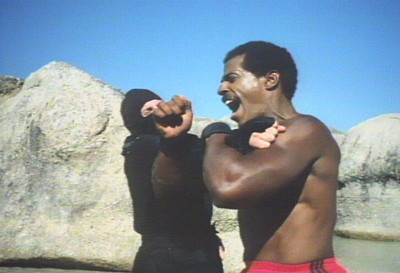
This was my undisputed favorite movie when I a child. How could it not be my favorite movie; it had ninjas, lots and lots of ninjas.

American Ninja is the story of generically named Joe Armstrong, a army recruit who just transferred to Hawaii. On a routine transport mission, the convey is beset by ninjas... because ninjas are common in Hawaii. Everyone dies but Joe and the colonel's daughter, of course, and Joe leads her to safety after unleashing some of his ninjas skills on a few of the attackers.

Unbeknownst to Joe, the ninja master was standing atop a nearby hill with his arms crossed, watching the entire event unfold. He swore vengence against Joe for disrupting the ninjas' attempt to steal military weaponry. I suppose the ninjas wanted the gun because they kept getting their asses handed to them when they tried to attack people with swords. Anyway, Joe teams up with fellow soldier, the stereotypically named Curtis Jackson; who fills the role of sidekick as well as token black guy.

Throughout the movie, Joe and Jackson are attacked by ninjas again and again until they get to the stoic boss ninja. Joe kills him and everyone lives happily ever after; but not before Jackson blows up a helicopter with a rocket launcher.

It's easy to see why American Ninja was my favorite movie as a child, with the ninjas, explosions, and more ninjas. Watching it again, though, I'm saddened by how bad some of the choreography for the fight scenes were. I mean seriously, who dies after a shoulder throw?


I have no idea what the ninja in the back right is so happy about.

Indiana Jones and the Temple of Doom

Hold on to your Potatoes!

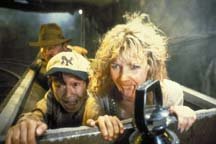
Indiana Jones and the Temple of Doom is the second in the Indiana Jones series. Dr. Jones begins the film in a nightclub with Lao Che and it’s there that we meet Willie Scott, the club’s whiney lounge singer.
After an altarcation Lao Che, he has to make a run for it with Willie and his kid sidekick, Short Round in tow.

They end up in India where Dr. Jones is asked to find a village’s lost children and return their sacred stone. Dr Jones, Short Round and Willie trav
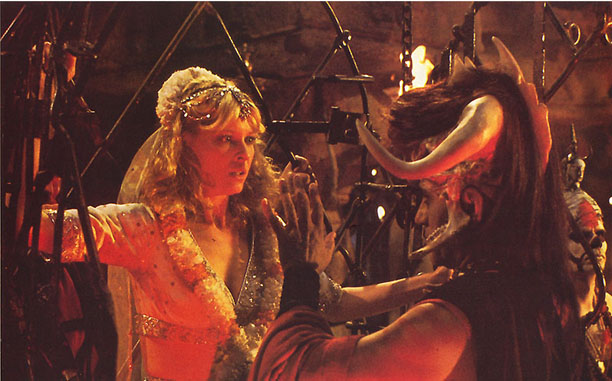
el to a hilltop palace, not far from the village where there are whispers of evil deeds. When they arrive, they are treated to an interesting, if gross dinner by the young price of the land. He and his advisors insist that there is nothing going on with the palace and the ancient cult that used to use blood sacrifices at the palace no longer exists. It does. They get caught up in the deadly cult and fatal worship. Indy saves the kids (who are enslaved - digging for other lost magical stones like the one stolen from the village) and the prince who was brainwashed by the evil cult leaders. In the end everyone is saved, Indy gets the girl and the glory and treasure.

This movie is fun, but is about as deep
as a puddle. It’s a lot like pop-rocks - at first it’s fun, but it gets damn annoying after a while. The music feels repetitive and the cuteness of the kid sidekick gets old fast. It hamstrings Indy’s character, which is already vulnerable because he has to protect the shrilling banshee of a leading lady. I know it is an adventure movie, but it travels too far into the realm of absurdity. The scene on the mine cars is fun, but too long, and the special effects are painfully dated. The film seems to be mocking adventure movies without meaning to. The first Indiana Jones movie felt inspired. The Temple of Doom felt too much like a Disney ride gone wrong - you know it’s going to end, and the end will be innocuous, but you can’t wait till the damn thing stops.